




What happens when mortgage rates are high and inventory is rising?
It creates a very different buying environment than we saw a few years ago.
The Twin Cities housing market is becoming more balanced, and understanding why matters if you are considering a move, especially if you have a unique financing situation or a specific goal in mind.
Think about the relationship between interest rates and inventory.
High rates + low inventory:
Buyers have fewer choices and sellers still have significant leverage. Competition can remain strong for desirable homes.
High rates + rising inventory:
Buyers have more choices and often more time to make a decision. This is where opportunities for negotiation, seller concessions and creative financing can become more relevant.
Lower rates + low inventory:
More buyers can afford to enter the market, but if there are not enough homes available, competition can increase quickly.
Lower rates + higher inventory:
This is generally the most favorable combination for buyers because affordability improves while selection remains strong.
So where are we today?
The Twin Cities has spent several years in a very supply constrained environment.
In 2023, the median sale price reached $368,000, even though closed sales fell 17.6% and inventory declined nearly 5%. There were only 1.9 months of supply at the end of the year. (Minnesota Realtors)
In 2024, the median price increased another 3.3% to $380,000. Minnesota Realtors described the market at the time as a difficult combination of rising prices, higher mortgage rates and limited inventory. Prices were not rising rapidly, but supply was still too tight for prices to fall significantly. (Minnesota Realtors)
In 2025, the Twin Cities median reached another record at $390,000, marking the 14th consecutive year of price increases. Then in June 2025, the median briefly crossed $400,000 for the first time, reaching $401,000. (Minnesota Realtors)
Now the picture is changing.
As of June 2026, Twin Cities inventory was up 5.1% from the previous year to 10,897 homes, while the metro had 2.8 months of supply. Homes were also taking longer to sell, giving buyers more time to evaluate their options and negotiate. (Minnesota Realtors)
And our current seven day snapshot shows just how much activity is happening beneath the headlines:
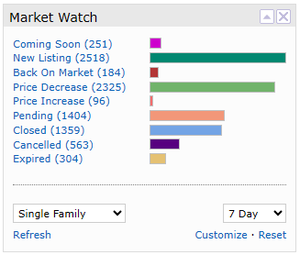
2,518 new listings
2,325 price decreases
1,404 pending sales
1,359 closed sales
That does not mean the market is falling apart.
It means the urgency has changed.
School is back in session. Seasonal demand is slowing. Mortgage rates continue to influence affordability. Inflation, energy costs, government policy and geopolitical uncertainty are also affecting consumer confidence and borrowing costs.
Nationally, NAR is seeing a similar transition. Inventory has improved and affordability has started to improve, but there is still a mismatch between the homes available and what many buyers can comfortably afford. NAR's research found that the national Listing Income Alignment Score improved from 66.7% to 74.9%, but remains below the 84.4% pre pandemic benchmark. (National Association of REALTORS®)
Interestingly, NAR has identified Minneapolis St. Paul as one of its 2026 markets with new buyer opportunities, particularly because a large number of households could qualify for a median priced home if mortgage rates move toward 6%. (National Association of REALTORS®)
So what does all of this mean?
It means you do not necessarily need to wait for the "perfect" combination of low rates and low prices.
You need to understand the combination that exists today and figure out how to use it to your advantage.
For some buyers, that could mean negotiating a better purchase price.
For others, it could mean asking for seller concessions, exploring special financing, taking advantage of a home that has been sitting longer, or making a move that simply would not have been possible when competition was at its peak.
And if rates improve later, refinancing may become an option.
The goal is not to predict the perfect market.
The goal is to recognize opportunity when the market gives you some room to work - and we are currently there!
That is exactly what I will be watching as we move into late fall and early winter.
Check out this article next